Geometry Dash
- 4.7
- Rating
- 10.00M
- Installs
- $3.99
- Price
 Analysis by App-foxy
I first approached Geometry Dash as a quick arcade game, expecting short attempts and simple controls. That part is true, but it misses what makes the game so demanding. Every tap has to arrive at the right moment while the level keeps moving, and a mistake usually means starting the attempt again. The result is a game that feels immediately understandable yet takes real patience to master.
Created by RobTop Games, this rhythm-based action platformer has built a large audience since its release on Aug 12, 2013. It is listed in the arcade category, carries an Everyone 10+ age rating, and costs $2.99. After spending time with it, I see the appeal: it is easy to pick up during a short break, but its hardest sections can keep me focused far longer than I expected.
How Geometry Dash feels in everyday play
I find the everyday appeal lies in how easily a spare moment can become a focused practice session: I can start an attempt quickly, then decide whether I have the attention for another. The useful trick is to treat each run as a chance to learn one cue, not as a demand to finish the whole level. That mindset makes the first steps feel less daunting, and it leads naturally to choosing a comfortable way to begin.
You May Also Like

 Blood Strike: 2.5 Anniversary
Blood Strike’s Loadouts Turn Every Drop Into a Tactical Gamble
A close look at Blood Strike’s custom loadouts: how fast access to signature weapons reshapes its battle royale rhythm, rewards preparation, and narrows the gap between fights.

 Pandora - Music & Podcasts
Pandora’s Music Is Easy to Start, but Harder to Recover
Pandora’s strength is its low-effort path from a seed to a station. Its weak spot is how much confidence it asks you to place in connection, setup, and quiet recovery.

 8 Ball Pool
 Is Built on Rivalries, Rematches, and Routine
A close look at the rivalries, rematches, shared routines, and unanswered safety questions that turn a quick pool match into a persistent mobile community.

 Samsung Music
’s Quiet Strength Is Playing What You Already Own
Its reach comes less from spectacle than from dependable access to a personal library. That simplicity is both the app’s strongest retention engine and its ceiling.

 AccuWeather: Weather Radar
AccuWeather Review: A Quick, Clear Forecast for Everyday Decisions
For everyday plans, the best forecast is the one you can understand quickly. AccuWeather makes rain timing, radar, and local conditions easy to act on, with a few trade-offs.

 Hill Climb Racing
Why Hill Climb Racing Still Turns Crashes Into One More Run
A tiny car, a bumpy hill and one more upgrade: Hill Climb Racing keeps resurfacing because its simple chaos makes every near-miss feel personal.
More From Our News Desk



Fast starts, demanding timing
The game wastes very little time getting me into an attempt. The basic idea is clear: guide the character through hazards by tapping at the correct moments, with movement tied closely to the music and the shape of each level. There is no complicated control scheme to memorize. The challenge comes from reading what is ahead and committing to a rhythm before the next obstacle arrives.
That immediate start is one of its strongest qualities. If I have only a few minutes while waiting for a bus or taking a break, I can play without setting up a long session. An attempt can end quickly, so the game fits naturally into small gaps in the day. At the same time, the restart loop makes it easy to continue after a failure rather than putting the phone away.
The perceived speed changes as I become familiar with a section. At first, hazards seem to appear too quickly for comfortable reactions. After several attempts, I stop reacting to each object individually and begin remembering the sequence. That shift is important: progress depends less on frantic tapping than on learning the level’s visual and rhythmic language.
I found that playing with sound makes the timing easier to understand, even when I am not consciously counting the beat. The music helps establish a pattern, while the visual layout confirms where a tap or change in movement should happen. Playing silently is possible, but it removes one of the most useful clues and can make familiar passages feel less predictable.
Why short attempts can become long sessions
The restart structure is both the game’s hook and its main source of friction. A failed jump does not simply reduce a health bar and let me continue. Instead, I have to repeat the earlier section and reach the difficult point again. That can feel harsh when a mistake happens near the end of a long sequence.
On the other hand, repetition gives each improvement a clear purpose. I gradually learn which jumps require an early tap, which gaps need restraint, and which visual patterns are designed to distract me. The game rewards memory and consistency as much as reflexes. Someone who enjoys practicing the same challenge until it becomes automatic will probably appreciate this structure more than someone looking for relaxed arcade entertainment.
A useful everyday approach is to divide a difficult level mentally into landmarks. I focus on reaching the next recognizable pattern instead of thinking about the entire course. This reduces the feeling that every attempt is an all-or-nothing test. It also helps identify whether my problem is timing, visual overload, or simply losing concentration after a successful section.
What happens during heavy-use moments
The most demanding moments are not necessarily the longest ones. A short sequence with rapid changes can require more attention than a slower stretch that lasts much longer. When several hazards arrive close together, I need to keep my thumb relaxed and avoid tapping early because of panic. Tension makes the controls feel less precise, even when the input itself is simple.
Repeated attempts also create a different kind of load: concentration. After failing at the same point several times, it is tempting to tap harder or rush the next action. That usually makes the result worse. I get better outcomes when I pause briefly, identify the exact visual cue that I missed, and then try again with one adjustment rather than changing everything.
This is where the game differs from many casual arcade alternatives. A typical endless runner may let me recover from a minor error or collect enough advantages to extend a run. Here, the central experience is stricter. The level’s design remains the challenge, and success depends on learning its demands rather than building a stronger temporary character.
For a realistic example, I would not recommend starting a difficult stage during a rushed commute if I know I will become irritated by repeated restarts. A better use is a quiet ten-minute break when I can give the screen my full attention. The game is excellent for turning a small amount of free time into focused practice, but not ideal when interruptions are likely.
Reliability and recovering from mistakes
My impression of the game’s reliability is closely connected to its simple input model. There are few controls to confuse, so when an attempt fails, I can usually understand that the problem was timing rather than an elaborate command sequence. That clarity makes recovery easier: I know what to practice next.
Recovery in the game is not about restoring a damaged run. It is about mentally resetting after failure. The restart loop gets me back into action quickly, but it also asks me to accept repetition as part of progress. I recommend treating early attempts as reconnaissance. Instead of expecting a complete run immediately, I watch for transitions, memorize the order of hazards, and use each failure to remove one uncertainty.
That approach matters because the game can feel unfair if I judge every attempt only by its final result. A run that reaches the same difficult passage as the previous one is still useful if I now understand why I failed. The sense of reliability comes from predictable rules and repeated patterns, not from forgiving mistakes.
There is also a practical reason to avoid playing while distracted. A notification, conversation, or accidental finger movement can break the concentration needed for a precise sequence. Since the levels depend on timing, the game is more sensitive to interruptions than a turn-based puzzle or a slower strategy title. I would choose another app if I needed something that could be paused mentally every few seconds.
Device limits and the right playing conditions
The current version is 2.2.144 and the minimum operating system listed is Android 6.0. That gives the game a broad range of compatible Android devices, although compatibility alone does not tell me how every phone will feel during demanding play. The important practical question is whether the device presents the action consistently enough for timing-based input.
Because the game relies on precise visual movement, a screen that feels delayed, unstable, or difficult to read can make the experience frustrating even if the game itself is enjoyable. I prefer playing with the phone held steadily, the display unobstructed, and audio at a level where the rhythm remains clear. These are small choices, but they matter more here than they would in a slower arcade game.
I also would not judge the game from a single rushed attempt on an unfamiliar device. The first few minutes are partly an adjustment to touch sensitivity, screen size, and the visual scale of obstacles. Once I settle into the controls, the challenge feels more consistent. If the device is older or heavily occupied with other tasks, closing unnecessary activity before a serious session is a sensible precaution, without treating that as a guarantee of better performance.
The game’s resource demands are difficult to separate from the specific phone and the way a person plays. Short sessions are naturally less demanding than extended attempts, and the simple control concept keeps the interface focused. Still, anyone buying it primarily for flawless high-pressure play should pay attention to how responsive the device feels during the first levels. A timing game exposes small control problems quickly.
Who will enjoy it most
I would recommend Geometry Dash to players who like rhythm, memorization, and repeated skill practice. It suits someone who enjoys seeing a difficult section become familiar through effort. It is also a good match for people who prefer direct controls and immediate feedback instead of managing inventories, dialogue, or complicated progression systems.
The game can work well for a parent looking for an arcade title with an Everyone 10+ rating, provided the child is comfortable with repeated failure and the intensity of the challenge. The age rating does not change the basic issue that some players may find the restart loop stressful. I would explain the game’s learning curve before handing it to a younger player who expects every attempt to feel relaxing.
I would skip it if I want a calm game that I can play while watching television, or if I dislike repeating the same passage after a late mistake. It is also not my first recommendation for someone who prefers generous checkpoints, gradual relaxation, or a story that carries the experience forward. A conventional casual arcade game may be better for those needs.
Compared with endless runners, this game feels more deliberate. Runners often emphasize reacting to an unfamiliar stream of obstacles, while Geometry Dash asks me to learn a designed sequence and execute it accurately. Compared with music games built around lanes or note matching, it gives the rhythm a physical platforming role: the beat supports movement, but I still have to read jumps, gaps, and transitions as part of a larger route.
Small habits that improve the experience
My first practical tip is to separate learning from performance. During an early attempt, I pay attention to what comes next rather than trying to finish. I note where the pace changes, where the screen becomes visually busy, and where a familiar pattern suddenly reverses my expectation. This makes later attempts more controlled.
Second, I avoid changing my tapping style after every failure. If I miss a jump, I ask whether the tap was early, late, or unnecessary. That simple diagnosis prevents random experimentation. The game’s controls are uncomplicated enough that a small timing correction is usually more useful than a dramatic change in hand position.
Third, I use sound as a timing aid but not as my only guide. Visual cues remain essential, especially when I am learning a section or playing in a noisy place. When the music and the screen seem to disagree because I am distracted, I slow down mentally and follow the level’s visible pattern rather than tapping on instinct.
Finally, I stop a session when frustration starts replacing attention. The restart loop encourages “one more try,” but tired attempts can teach bad timing. A short break often helps more than forcing another dozen runs. This is a game where concentration is part of the equipment, and preserving it improves the value of each attempt.
Value, audience, and long-term appeal
At $2.99, the purchase makes the most sense for someone who expects to return to the challenge repeatedly. I would not describe it as a one-evening game. Its value comes from the number of times I can revisit a section, notice a pattern I missed, and gradually turn a difficult sequence into something reliable.
The audience response is substantial: the game has a 4.7 average from around one million ratings, with over ten million installs. Those figures fit my experience of a title that is easy to understand but deep enough to create a committed following. They should not be taken as a promise that every player will enjoy the difficulty, though. A strong reputation cannot remove the personal question of whether repetition feels satisfying or exhausting.
The developer’s long-running support is reflected in the current version, but I would still evaluate the game by its core interaction rather than expecting it to behave like a constantly changing service. The central appeal is the relationship between movement, music, and level design. If that foundation works for me, the game has lasting appeal; if it does not, extra content would not solve the basic mismatch.
My performance verdict
Geometry Dash feels fast because every action is exposed: there is little room to hide a mistimed tap behind automated assistance or a forgiving recovery system. In normal short play, that directness is a strength. During demanding sequences, the same design makes the game unforgiving and places greater importance on a responsive device, a clear view, and uninterrupted concentration.
I appreciate that failures are easy to understand, even when they are difficult to overcome. The game does not pretend that progress will be effortless. It asks me to learn, repeat, and refine. That honesty is why I can recommend it to a friend who enjoys skill-based arcade games, while still warning a casual player that the first impression of simplicity is misleading.
My recommendation is clear: choose it for focused rhythm-platforming practice, not passive entertainment. If you enjoy the satisfaction of finally clearing a section that once seemed impossible, the $2.99 price is reasonable and the experience can remain rewarding for a long time. If you need forgiving checkpoints, relaxed pacing, or something that tolerates constant interruptions, another arcade option will suit you better.
After reviewing the game as a whole, I see why Geometry Dash continues to stand out in its category. Its speed, sound, and obstacle patterns work together to create a very specific kind of challenge. It is compact in concept but demanding in execution, and its best moments come when practice turns a sequence from overwhelming into almost instinctive. That is a narrow appeal, but for the right player, it is a remarkably effective one.
FAQs for Geometry Dash
01What is Geometry Dash and what can I expect from it?
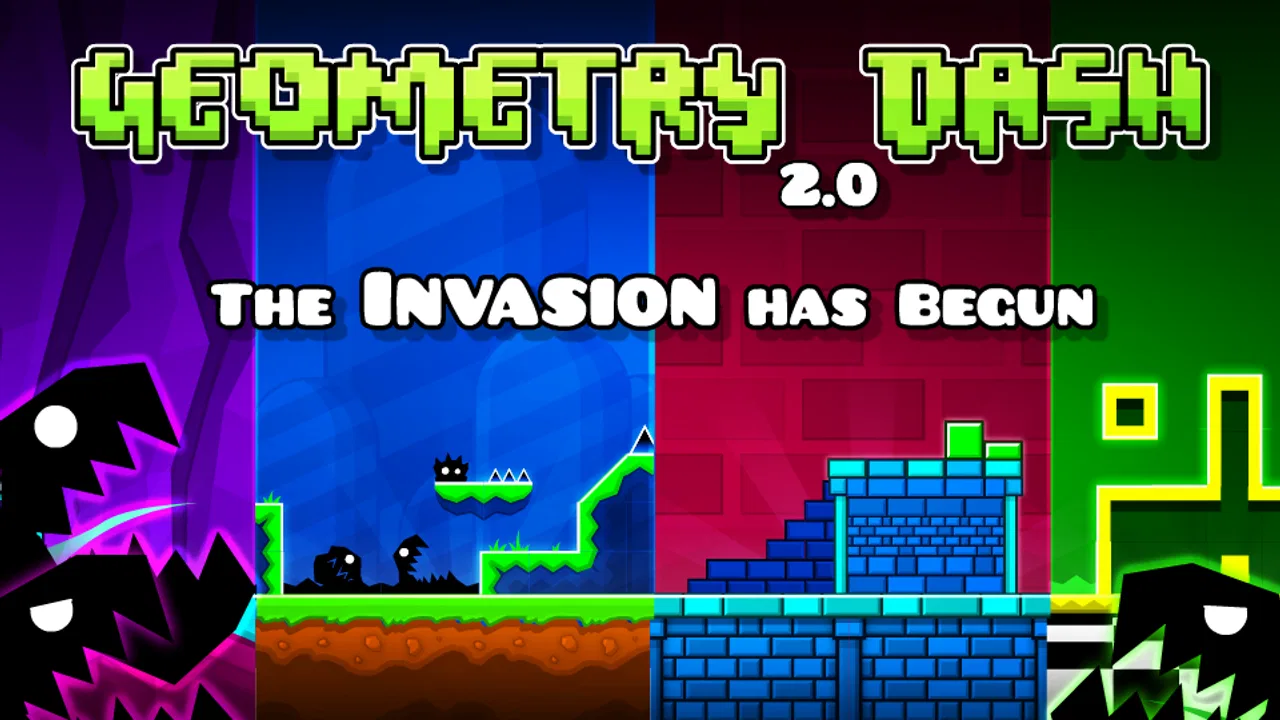
Geometry Dash is a rhythm-based action platformer game where players navigate a series of levels filled with obstacles. Expect challenging gameplay that requires quick reflexes and precise timing. The game features vibrant graphics, a catchy soundtrack, and a level editor that allows you to create and share your own levels.
02Is Geometry Dash suitable for all ages?
Geometry Dash is suitable for most age groups, but it can be challenging. The fast-paced gameplay and complex levels may be difficult for younger players. However, it offers a fun experience for anyone who enjoys rhythm-based games and has a knack for quick reflexes. Parental guidance is recommended for younger children.
03Does Geometry Dash require an internet connection to play?
Geometry Dash does not require an internet connection for its main gameplay, allowing you to enjoy the game offline. However, an internet connection is necessary if you want to access and download user-created levels or share your own creations through the game's online features.
04Are there in-app purchases in Geometry Dash?
Yes, Geometry Dash offers in-app purchases. While the core game is available for a one-time purchase, you can buy additional content such as new icons and level packs. These purchases enhance your gaming experience but are not necessary to enjoy the full game.
05Can I customize my character in Geometry Dash?
Yes, Geometry Dash allows for character customization. You can unlock different icons and colors as you progress through the game. This feature lets you personalize your character's appearance, adding a layer of personalization to your playing experience. Customization options are expanded through achievements and in-game purchases.
Pros
- Engaging levels with increasing difficulty.
- Custom level editor expands gameplay.
- Catchy soundtrack enhances experience.
- Smooth
- responsive controls.
- Offline play available anytime.
Cons
- High difficulty can be frustrating.
- Limited free version features.
- No multiplayer mode.
- Repetitive gameplay for some users.
- In-app purchases can add up.

Geometry Dash
Gallery